ARTICLE #43 – Spring Has Sprung
by Arrachme
While spring may not yet be fully here, its presence is evident in the subtle signs around us. Torrential rainstorms, though brief, serve as a reminder that it’s time to tackle the rapid growth of weeds in our gardens. In Florida, we experience an occasional “Arctic blast” with temperatures dipping to a frigid 35 degrees or lower — but that’s just a fleeting moment before the weather shifts back to warmer days. This constant back-and-forth continues until temperatures consistently reach the 90s. The skies are bright blue again, filled with billowing fluffy clouds.
Saturation – Desaturation
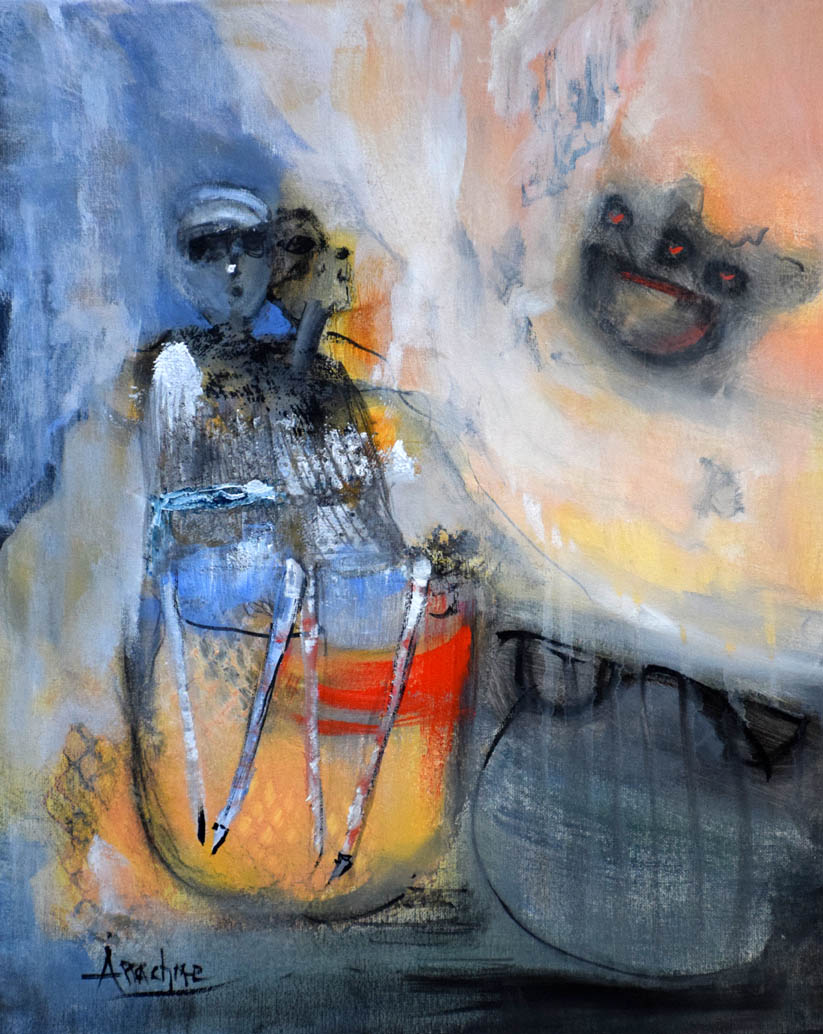
Much like the changing season, this dance of contrasts mirrors a vital technique in art called saturation and desaturation. Though commonly used in abstract painting, this principle applies across different forms of artistic creation. Here is an example. The painter applies a layer of paint, then gently wipes it away, leaving behind a thin, translucent layer. Artists skilled in this process can achieve glazed layers that create depth or a misty, ethereal appearance. When painting the sky, this technique adds a three-dimensional quality. With the right combination of paint and mediums, artists can evoke a hazy, atmospheric effect. Over time, as an artist refines this technique, it becomes second nature, so much so that they may not always be able to articulate their process. Teaching these methods, like mastering the techniques themselves, is an acquired skill.
J.M.W Turner, a British artist 1175 – 1851, known for his imaginative landscapes, often used the saturation desaturation technique. His paintings of the Burning of the House of the Lords and Commons are a prime example. The sky was a flame, with the visible as it smoke settled over the River Thames. Paintings like this are why many often call him the father of impressionism. It’s a title that he rejected, as he did most things. He marched to his drum. Two depictions reside in the Philadelphia Museum of Art and the Cleveland Museum of Art.
Overcoming Artist’s Block
Artist’s block, much like writer’s block, is a natural ebb and flow of life. Even the most prolific creators can experience moments of stagnation, often triggered by life changes, health concerns, family obligations, or other challenges. I’ve found that occasionally stepping away from painting — taking a sabbatical, so to speak — is necessary. Much like the transition between winter and spring, taking a break allows for recharging and renewal.
For newer artists, the temptation might be to prematurely sell off their supplies and turn to other activities, such as pickleball, golf, or swimming. During this time, doubts may creep in: “Will I ever paint again? Did I waste my time? Maybe my teacher was right when they said I had no creative talent.”
However, despite seeking other distractions, many artists return to their craft with renewed energy and fresh perspectives. The block eventually fades, just like the arrival of spring, and the creative process begins anew.
Time for an Art Vacation
After a period of intense painting, I recall a trip to Europe that offered a much-needed break. Our first stop was France, where we immersed ourselves in the Louvre’s vast collections — an overwhelming feast for the eyes. We then ventured to Montmartre and the Moulin Rouge, reflecting on the conversations once shared by iconic artists like Toulouse-Lautrec, Picasso, and Modigliani over a glass of absinthe.
Next, we traveled to Italy, where Florence’s art museums, such as the Uffizi, were filled with priceless works amassed by the Medici family. To fully absorb the experience, we visited the Medici palaces, exploring the hidden passageways they designed for safety and privacy. Florence felt like slipping into a well-worn, familiar shoe.
Returning home, I was inspired to begin My Compass Series, which I continue to expand upon today.
The included painting,” Legacy of Light”, was inspired by Florence. We have had many kings and leaders, both real and self-appointed. The Compass Series was developed with unintended subtle suggestions, similar to automatic writing, only with a paint brush, not a pencil. Images appear on canvas during the painting process and then are embellished with saturation and desaturation. The process takes time and patience between layers.
Conclusion
So, if you’re an artist feeling as though you’re in the winter of your creative journey — where enthusiasm wanes and inspiration feels distant — remember that spring is just around the corner. Embrace the pause, and trust that new ideas and opportunities for creation are on the horizon.